Sunday, December 7, 2014

Theodore Roosevelt Historical Site


Buffalo, N.Y.

We visited Buffalo in September of this year well before the historic November snow fall. It's never been on my list of top 10 cities to visit but in 2012 it was the site of the National Trust for Historic Preservation's annual meeting so my interest was piqued.

I did my research before arriving and we went down a check list clicking off some of the city's most impressive architecture and historic sites.

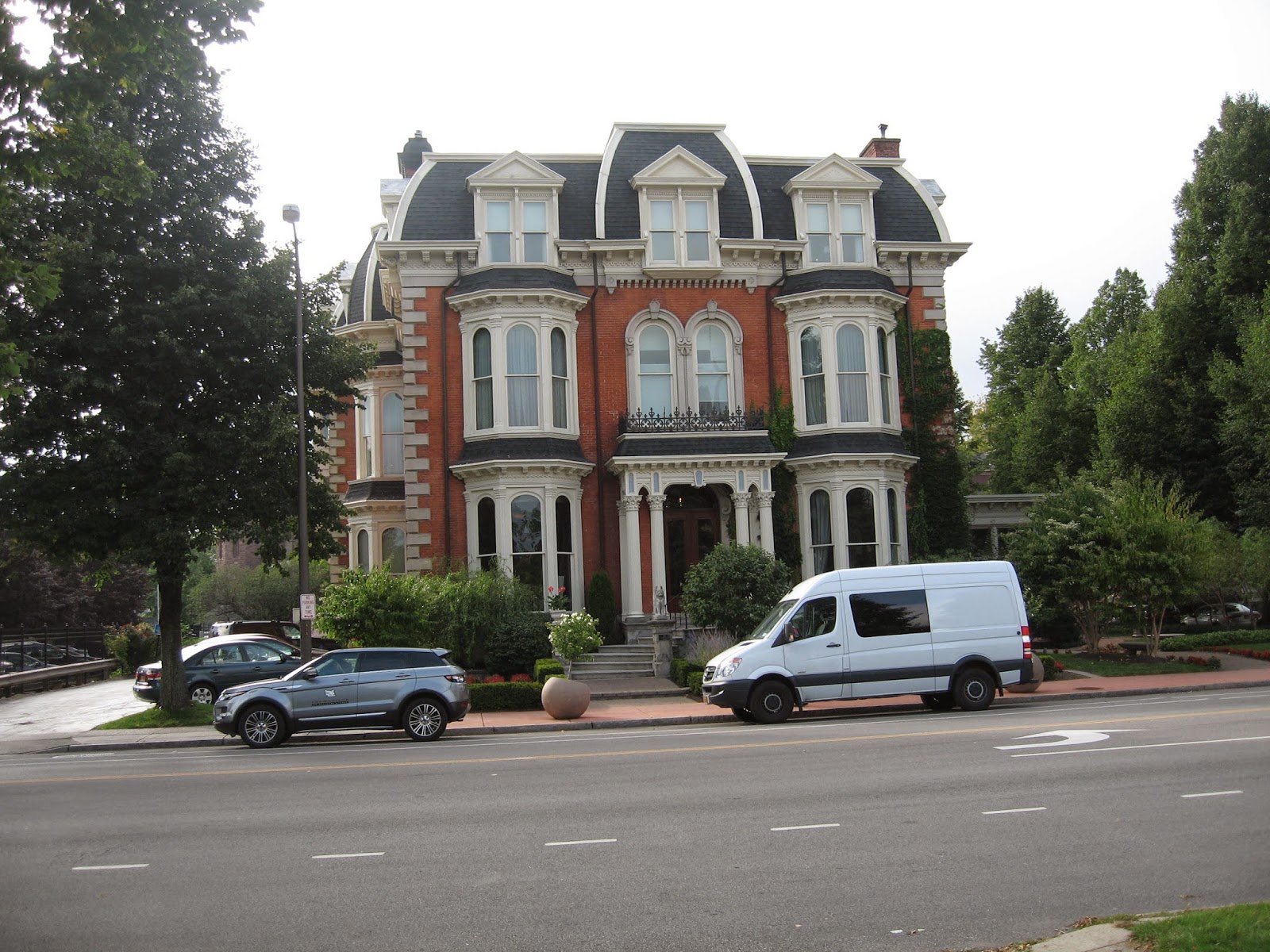
This house has a fascinating story to tell though not about the Ansley Wilcox family who owned the home but instead about one day in history - the day Theodore Roosevelt was sworn in as President of the United States in the first floor library.


On Sept 6, 1901 while greeting the public at the Pan American Expo President Mckinley was shot by an anarchist.  Vice President Roosevelt immediately traveled to Buffalo.  After surgery President Mckinley rallied and the surgeons were certain that a complete recovery would soon follow. Roosevelt decided to join his family for a vacation in the Adirondack Mountains.  Three days later he was urgently called back to Buffalo.  The President was near death.

In his haste to reach Buffalo Roosevelt had not packed his formal attire. For the swearing in ceremony he borrowed clothes from Wilcox, the home's owner and an old friend.

Only one photograph of the day was ever taken and that was outside on the front porch prior to the swearing in ceremony. Once inside the small library the two photographers present got into a scuffle while jockeying for position. Roosevelt threw them out.


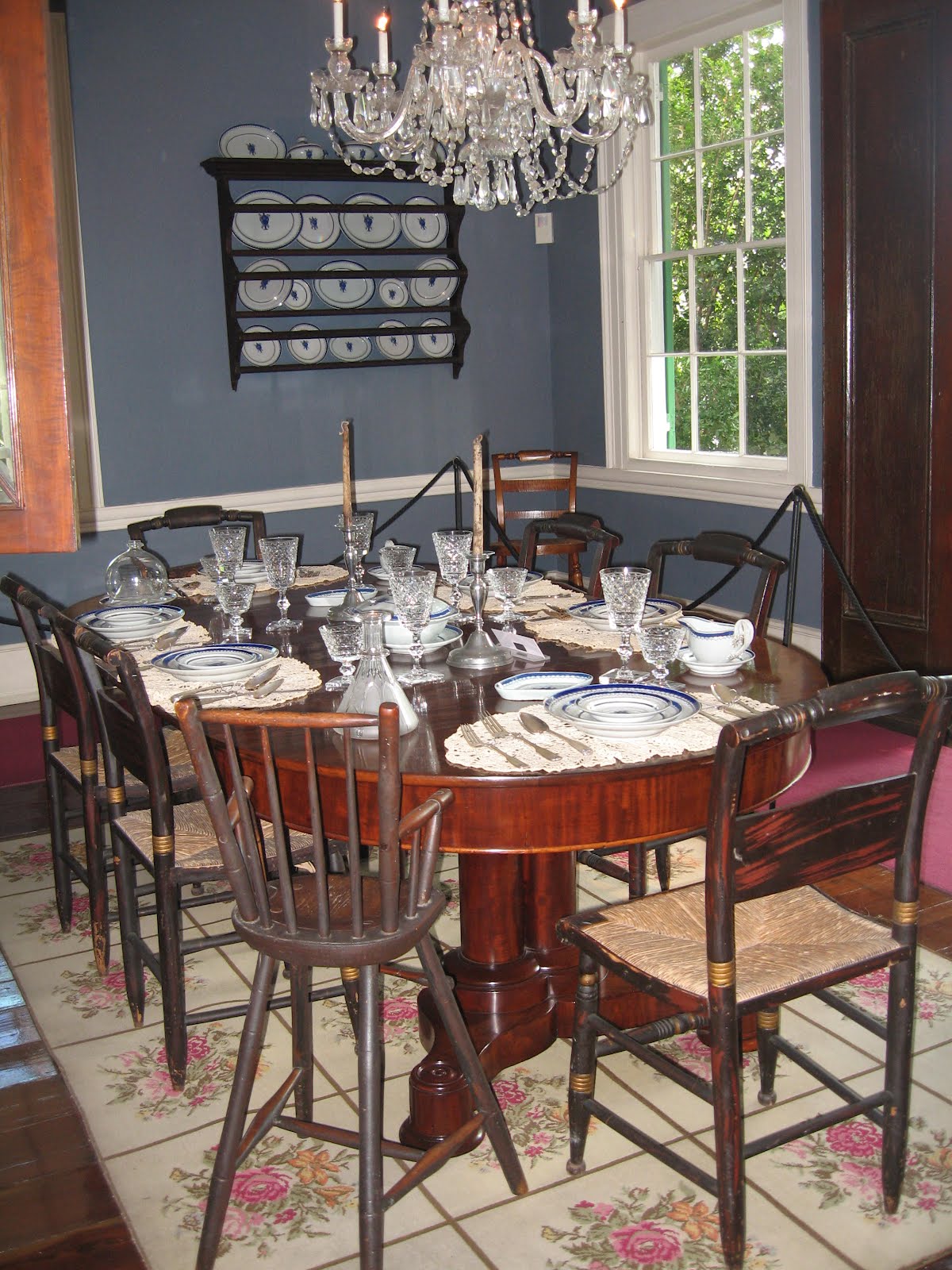
This historic site has an unusual tour.  It recreates sights, sounds and smell begining with the apparent carnival like atmosphere of the Pan American Expo.  Then as you enter the dining room you smell the aroma of coffee - a favorite drink of Roosevelt's.

Here's a few photo's from some of our other stops in Buffalo.

Frank Lloyd Wright's Darwin D. Martin House Complex


Prudential(Guaranty) Office Building
Architect Louis H Sullivan
All-Steel Frame with Terra Cotta Veneer
Built 1895


The Mansion of Delaware Ave !
our hotel 


Monday, September 22, 2014

Merchant's House Museum

New York, New York

Now's the time to visit the Merchant's House Museum in NoHo.  According to the Sunday New York Times an eight story hotel is about to go up next door and if the house shifts just a quarter of an inch during construction extensive damage could be caused to the house's plaster moldings.

I thought of visiting several times in the last 3 years but waited because there was always some part of the house closed off for renovation.  Maybe that was the pre-emptive work that the article talks about.

The Merchant's House is one of 23 member sites of the Historic House Trust of New York City.  The Trust's website gives you an introduction to their homes and a link to individual websites.
http://www.historichousetrust.org/item_list.php

Take a look at the Times article and if you're interested let me know.  We can visit together before the the ceiling starts falling down.
http://www.nytimes.com/2014/09/21/nyregion/two-goods-reasons-to-visit-noho.html?module=Search&mabReward=relbias%3As%2C%7B%221%22%3A%22RI%3A9%22%7D

Wednesday, February 6, 2013

Hemingway #3

You already know  that the Ernrst Hemingway Home and Museum in Key West, FL is one of my least favorite house museums.  So you won't be surprised that the Dec 23, 2012  NY Times article on the home has not stirred me to action.

The article recounts a nine year losing battle with the U.S. Department of Agiculture over the right to  regulate the cats under the Animal Welfare Act.  While it did conjure up some wild images of under cover agents observing and surreptitously photographing the cats, I'm not inclined to view the museum as a simple house museum forced to run through a bureaucratical maze.  My impression of  it stands : a well run tourist business with it's bottom line well highlighted.

Yet the article does have some great pictures of the house and the cats who live there.

Hildene update


I'm thrilled that the movie "Lincoln"  has found such a wide audience as well as garnered so many accolades.  Such non glossy Hollywood films, especially a historical one, typically create little interest.  Yet who realized that the media buzz around the film would increase attendance at a house museum?

My ever so observant Vermont friend has sent me an article from a local paper about the expected boost in attendance at Hildene, the home of Robert Todd Linclon.  Before you drive up for a visit take a look at my Nov 10, 2011 entry on the home.  And if your interested in a local tour guide with inexhaustible knowledge and the friendliest welcome you can imagine, give Monique a call! 

Tuesday, October 23, 2012

Perry House

Stratford, CT


As I stepped through the door Pam and  Carole made it as clear as the sunny summer morning,  "The Perry House is not a house museum."  The defining feature most illustrative of that is the fact that here you are encouraged to TOUCH.  The staff prefers the designation of educational center.  And in fact many school children visit the house annually.

When Benjamin Beach, a ship builder, built the oldest portion of the house in 1680 it was fronted by King's Highway which at that time was one of the busiest roads in the country. During the Revolutionary War General Washington passed by the house many times, once accompanied by the Marquis de Lafayette.  

In 1954 the building was divided up into three apartments and in her 1981 will the owner left the property to the town of Stratford.  At one point while the house was boarded up many of the architectural details were stolen and sold to antique shops.  The house came close to being demolished when the nearby senior center petitioned the town for more parking spaces.

Yet the Perry House Foundation has resurrected the home and created a vibrant learning environment with fascinating building quirks resulting from the home's more than three centuries of use.  You can still see the graffiti scratched by school children into the fireplace mantle when the West parlor served as a school from 1889-1898.


A recent archelogical dig in the back yard identified a privy's round wall.  Evidently that's a rare find as there is only a small number of round walled privies in NY state and almost none in CT.  Musket balls, china and eye glasses were also found.

I don't often get a chance to take photos inside but since the Perry House is not a museum touching and photo taking are allowed.


Sunday, August 12, 2012

Campbell House Museum

St. Louis, MO

It's a serious thing though you wouldn't guess from the blog entry's witty title "SAVE OUR (GL)ASS".  The Campbell House Museum in St. Louis, MO was broken into one night last week and the cash box with just less than $100 was stolen.  But that was certainly not the worst of it.  One of the 5 foot by 18 inch panes of etched glass in the front door was broken.

My first thought was how could the museum leave such valuable and memorable glass panes unprotected.  As you can see in this photo, they didn't.


To gain entry the thugs first  jumped over a wrought iron fence, then jimmied the slide lock on these massive exterior wooden doors, and finally threw a rock through the interior glass pane.


I'm not sure when or if I'll ever visit the Campbell House but I'd like to know that the doors have been restored.  Chip in along with me.  Modest donations add up.

To read more visit The Campbell House blog:  http://campbellhousemuseum.wordpress.com/

And to learn more about Robert Campbell, the renowned fur trader and entrepreneur, as well as the 1851 home he built with his wife Virginia go to : http://www.campbellhousemuseum.org/index.html


Wednesday, August 8, 2012

Captain David Judson House

Stratford, CT


What's a young aspiring preservationist to do during the dog days of summer?  Those in Stratford, CT attend the annual history camp.   The week long camp for fourth graders through high school teaches kids about life in the 1700's.  The campers learn about butter making, candle dipping, weaving, and herb gardening.  They can become junior docents and on the last day of camp lead family and friends on a tour of the home.

My recent tour was lead by Pam and the junior docent of the day, Emily. They were both very knowledgeable about life in the 1700's and the many tools, farm implements, and household products of the day.  In fact my overall impression of the home was not about the family that lived there but about the many artifacts of the time period.  I  could probably skip camp and go right to the junior docent position.

Highlights for me:

*  The bulls eye glass in the front door was probably made in England.  In the 1750's, due to British Parliamentary regulation not expertise, glass was not made in the US.

*  As your candle burns down it becomes more difficult to read your book or sew but if you have this handy little table/candle holder that twists up and down like a screw you'll hold onto that light a little bit longer.

*  Privacy is something very important to us today.  But that wasn't true during colonial times.  In the Judson House living room is a corner chair or chamber pot chair.  There was no need to clear the room if you needed to "use the facilities".  Just pick up the chair top and then your dress.

*  Candles were made from meat fat so in addition to emitting a distinctive odor they were attractive to mice and thus kept on the wall in a metal candle keeper.

*  The coming and going room.  Love the name.  So simply states its purpose.  Birthing and dying.

*  Tea!  We all know how big a thing that was in the colonies and in the Revolutionary War! Somehow  tea was condensed into rock solid bricks that were shaved to create a small amount of loose tea to use for brewing.  The house has two tea blocks.  One brick was about 1 X 2 inches and the second one was huge at maybe 5 X 8 inches.  Both had an intricate design stamped onto the front.

I'm beginning to see an interesting thread in my tours and reading.  The stories of how buildings are saved and rehabbed are themselves fascinating pieces of history.  In 1925 the Judson House was given by the Curtis sisters to the town of Stratford.  The gift included a stipulation that the town raise $10,000 for upkeep and maintenance.  With an astonishing $13,000 Stratford surpassed the goal and the local Historical Society was born.


Sunday, August 5, 2012

Ally Quest


Love my membership with the National Trust for Historic Preservation!  It keeps me up to date with news in the preservation world, introduces me to new places, and helps support the kind of historic preservation that's important to me.

I found Ally Quest as I was "thumbing" through my E Newsletter from the Trust.  At first glance I thought this would be me and my blog on video.  Travel and history - Ally's thing and mine.  But if you know me and my blog and check out Ally and her video, we're not exactly twin like.  Yet we evidently do have something in common.

As Ally says: "Experience what it's like to live in another decade.  Explore towns that time has forgotten, restaurants that are really relics of the past, hotels with a place in history, significant spots that still exist today and hold a real glimpse into another time."  Those are all things I like to do on my vacations.  I've just narrowed down my chronicling to house museums.

Check out Ally's episode on Catalina Island that features the Inn on Mt Ada, a Wrigley Mansion. http://www.youtube.com/watch?v=bentTSsxOWI&feature=plcp Then take a look at my blog entry on the Wrigley Mansion in Phoenix, AZ.  (4/6/09)

I've sent her a link to my blog.  Why not?  It's a great source for future Ally Quest episodes.  You'll be the first I'll shout out to if anything develops.  Is there a video guest appearance in my future??

Tuesday, July 31, 2012

Audubon House and Tropical Gardens

Key West, FL


We were off to Florida's Gulf coast but ducked into the Audubon House as we passed by on a walk.  Happy we did!

The home was never owned by John Jay Audubon, the acclaimed ornithologist and naturalist, but is known for him because he stayed with the owner of the home, Captain John H Geiger, when he visited Key West in 1832. During his visit Audubon identified 18 new birds found in the Key's for his "Birds of America" folio.  Some of his most famous drawings were done at the home and the Geiger tree, appearing in Audubon's painting of the white-crowned pigeon, was in the front yard of the home. The second floor of the home displays original hand watercolored lithographs and engravings that are available for purchase.

The other interesting story link here is Captain John Geiger who was a prosperous  Key West harbor pilot and master wrecker.   I quickly caught onto the meaning of harbor pilot but what's a master wrecker?  Google's first choice was auto towing but not far behind came maritime towing and salvage.

In a blog post on June 1, 2010 the author, Cate Masters, listed her top 10 interesting facts about wreckers. I thought they were pretty interesting too.   http://harveyle.blogspot.com/2010/06/apa-cate-masters.html

1. Wreckers plied their trade not only in Key West, but in the Bahamas, and as far away as the United Kingdom. 

2. Because so little diving equipment had been invented, wreckers salvaged ships’ cargoes from the bottom of the sea the hard way – holding their breath for several looong minutes. 

3. Though some claim wreckers set traps for wayward ships, no evidence backs this up. 

4. In the mid 1800s, nearly one ship a week wrecked off the coast of Florida. 

5. Wreckers known as Conchs came from the Bahamas, but were of English descent. 

6. Some wreckers lived to ripe old ages, but many perished from drowning, shark attacks, boating accidents or, in the earliest days, at the hands of pirates or Seminole Indian massacres. 

7. Because Key West men outnumbered women by ten to one, many wreckers married the women they saved from watery graves. One ship became known as the Ship of Brides, its German passengers marrying wreckers, including a widow and her daughters. 

8. Average shares earned by individual wreckers amounted to hundreds of dollars per shipwreck. Imagine how much money that translates to in current dollars! 

9. Wreckers followed 13 rules of their trade, but the unwritten rule was to rescue a ship’s passengers first, then its cargo. 

10. The Florida wrecking industry continued until the early 1900s. 

The Audubon house is another home that was slated for demolition but saved.  In 1958 the Wolfson Family Foundation spearheaded the drive to save and restore the home.

Tuesday, July 17, 2012

Harry S Truman Little White House

Key West, FL


It doesn't look like a house from the outside.  Maybe that's because it was built in 1890 by the U.S. Navy to house the base commander and paymaster.   Yet inside with the aid of an engaging and well informed tour guide the house certainly felt like a Presidential retreat.

Truman spent 175 days in residence from 1946 to 1952 using it both as a retreat and functioning White House.  John F Kennedy, Jimmy Carter, Bill Clinton, Colin Powell also either stayed in the home or used it for meetings.  And during World War I Thomas Edison lived there while conducting experiments and developing weapons for the Navy.

Don't miss the official website www.trumanlittlewhitehouse.com.  Among other things there's a list of 11 logs chronically Truman's visits to Key West.  I chose to read "Log of President Truman's Fifth Trip to Key West : Nov 7-21,1948.  Log No. 5. " It's a detailed view of exactly how he spent his time on this two week trip.  Here's a few highlights:

* The President lost his eyeglasses while swimming in heavy surf.  They were recovered later when he noticed them at the water's edge.

* Mrs Truman and Margaret left for Havana aboard the Williamsburg at 8:30 A.M.  The Ambassador and Mrs Butler first greeted them aboard the ship and then escorted them on a sightseeing tour of Havana.  The Trumans rested on the ship in the afternoon and returned to shore to an afternoon tea at the American Embassy.  At 11 P.M. the Williamsburg began the return trip to Key West.

* The fishing parties were often quite successful, catching barracuda and grouper.

* The president rarely watched the movies that were shown nightly in the living room.   However on the first night of his wife and daughter's stay he joined them to watch "Apartment for Peggy" starring Jeanne Crain.  He did often watch newsreels especially those reporting on his recent reelection.

* The morning of his wife and daughter's arrival the President shaved his vacation stubble.

There's a chart at the end of the tour showing the results of an historians' evaluation of Presidential leadership.  Fascinating to see that Truman's star has risen over time to now place him near the top at #5.


Friday, July 13, 2012

Hemingway #2

Family room couch, CT

This post is a little late and perhaps a bit early.  Just after posting about the Hemingway House and Museum in Key West, FL we watched the HBO movie Hemingway and Gellhorn on demand T.V.    And wow is the home accurately portrayed in the movie.  Remember the antelope head on the wall in my blog photo?  There it was on the living room wall in the movie.  And those enormous green shutters, and the cats?  All there.  The home came alive in the movie. When I visited the totally distracting actor / guide and crowds made that impossible.

Watching the movie I was sorry to see Ernest leave his wife Pauline in Key West to go off to the Spanish Civil War - no more views of the house!  Well perhaps that's not true.  We haven't yet finished the movie.  Maybe they'll go back to the Key West home at the end of the movie.  Better keep watching.

Saturday, June 30, 2012

At Home With Frank Lloyd Wright


I've been hanging around the periphery of the Frank Lloyd Wright fan circuit.  I've toured Taliesin East and West, his Oak Park home and neighborhood, Fallingwater, and the Guggenheim Museum.  I've read the two recent historical fiction accounts of his personal life along with anything else in the newspaper or preservation news.  And I've dream of seeing more of his work, noting in this blog a list of FLW homes that you can rent on vacation.

But here's something new.  A 2000 foot gallery opened on June 2 in the FLW designed SC Johnson Administration Building in Racine, Wisconsin.  (scjohnson.com/visit)  The gallery will have rotating exhibits with FLW's "designs and artifacts, and will explore his influence on families and the American home".

The chief curator of the inaugural exhibition, "At Home With Frank Lloyd Wright, said it seeks to illustrate FLW "radical deviation from Victorian architecture by opening floor plans, connecting with nature, using natural materials and not hiding them with paint or wallpaper."

Sounds fabulous.  Best of all, I have to admit, they seem to have liked my blog title,
At Home With House Museums !

Monday, June 18, 2012

Hemingway Home and Museum

Key West, FL


Look at the line to get into this house museum!  I should have told them to forget it.  Go a mile and a half up the road to the Truman Annex.  That's worth the visit!

It's very unusual for me not to like a house museum.  In fact I can say I'm happy to have seen this one but mostly to cross it off my list.  But that's not saying much, is it?

What didn't I like?  It was all business and was it doin business! There were so many people visiting first thing in the morning that there was a line to get in.  My tour group members gathered in the dining hall.  As we moved about we were sometimes forced to take a different route because another group was already in the room we wanted to see or we waited single file for others to pass us so we could proceed into the room or up the stairs.  It's a compact home on standard lot and on most days I'll bet its overflowing with tourists.

And then there was the tour guide!  He has to be an underemployed or perhaps formerly employed actor.  The tour was really his opportunity to run his lines by us.  The Hemingway Home website has a little bio, just like in a playbill, on each tour guide.  I don't believe this was my guide but here's part of the bio on another guide: "describes himself as an "edutainer." His philosophy is that if he can touch as many lives as possible, however briefly, and have people smile, he is doing something worthwhile with his life. Joe would like you to know that he has completed over 6,000 public performances at the museum." 

And unlike most house museum guides our guide wasn't interested in our questions, either before or after his spiel.  But he was interested in tips!  He had an especially distasteful little shtick at the end of the tour when he asked for tips.

Actually a good question.  Should you tip house museum tour guides?  I don't believe I ever have.


a descendant of Hemingway's six-toed cat


Hemingway wrote many of his classics while living in Key West.  They include: Death in the Afternoon, Green Hills of Africa, To Have and Have Not, For Whom the Bell Tolls, and The Fifth Column.  This small second floor room in a smaller building at the back of the property is where he preferred to write early in the morning.

Tuesday, May 29, 2012

Duke Homestead and Tobacco Musuem


Durham, NC


I asked my sister Susan if she planned on bringing her grandchildren to the Duke Homestead and Tobacco Museum.  Well, she said, that's a little tricky.  While they'd enjoy the animated farmer characters in the museum, like the gift shop toys and run wild in the expansive fields surrounding the Homestead there was the issue that at the heart of it, the museum is about tobacco.  Of course the family take on that is one of total abstinence.

While I'm totally on board with this anti-tobacco philosophy, I forgot about all that as we had a pleasant morning learning about the Duke family, Durham history and of course tobacco.


Washington Duke, a middle aged farmer, returned home after fighting for the Confederacy in the Civil War to learn that the Union army soldiers had taken up the habit of rolling cigarettes with the local, bright leaf tobacco.  His decision to grow and sell the "weed" proved to be the start of what was to become the The American Tobacco Company.  The success of the company hinged not only on the bright leaf tobacco but on the marketing genius of James Duke, one of Washington's sons.

At Home With House Museums chronicles history; it's rare, no unheard of,  to "contribute to it".  Yet at the Homestead we did!  While standing behind a work table in the early factory our well informed tour guide noted that in order to pay for the ever increasing Civil War debt, the Congress passed on July 1, 1862 a heavy tax on tobacco.  And in 1868 this tax was a main source of income for the federal government.  

Maybe you had to be there to hear the way Jennifer, our guide, told the story but the question that popped into my mind, was "when had the government first taxed tobacco?".  Good question Jennifer said but she didn't happen to know the answer.

A minute went by, maybe less, and another tour group member reading from his iPhone phone told us that  in 1794 Alexander Hamilton, Secretary of the Treasury, ordered the first excise tax on tobacco products.  That satisfied my curiosity and I thought that was the end of the story.


A month later Sue, remember the sister with the grandkids, had more visitors to her new hometown of Durham.  Back she went to the homestead for another tour. The guide once again stood behind the factory work table and spoke about the civil war tobacco tax.  But now added into the standard tour guide talk is the iPhone information about the first tobacco tax in 1794!

During my visit to the Homestead it was easy to become immersed in the agricultural techniques, the marketing savvy and the humanitarian efforts of the Duke's and to forget about the evils of tobacco. One last tour group question, not about evil tobacco but something else, whiplashed me back to reality.  "Did the Dukes have any slaves?"  While she hadn't included it in her talk our guide knew the answer to this one.

Only one.  A female to shoulder the heavy repetitive tasks of housekeeping in the early 1800's...

Caroline, a 10 year old child.

corn husk broom


Saturday, April 14, 2012

Bidwell Mansion

Chico, CA

 It's a bit of an unusual relationship.  Jane and I became friends/acquaintances because our email addresses are almost identical.  I was serving on a volunteer committee and in our back and forth emails one of the members dropped a letter from my address.  Next thing we knew Jane from California was in the loop and regretfully declining attendance at the next meeting.

When Jane learned about my passion for house museums and this blog she recommended her local favorite, the Bidwell Mansion in Chico CA.

Though not planning a trip to the West Coast anytime soon, I was intrigued.  But I was stopped in my tracks.  Early search results  focused on a listing of over 70 California state parks slated for closing in the summer of 2012 due to the dire California budget crisis.  Bidwell Mansion was on the list! 

Reading further the Mansion looked just like the kind of property I love to tour and write about.  It's interesting to me at every turn... so many historical references in the related biographies, so much period furnishings and interior design elements, so many architectural details, and so much beauty in the surrounding geography!

The Bidwell Mansion Association is raising funds to keep the Mansion open for another year!  Let's hope they're successful and that they're ingenious enough to keep Bidwell open year after year.

To learn more about what we're missing at the Bidwell Mansion go to Martha's Musing. And for more discussion about the California park closings as well as the Bidwell go to the blog  State Park Closures Trip.

Sunday, January 29, 2012

Downton Abbey Frenzy

We're all in a frenzy over Downton Abbey on Masterpiece Theatre.  The 20 room mansion in the series has attracted almost as much interest as the vivid personalities who inhabit it.  Highclere Castle, in Hampshire England, is the real grand house where the show is filmed.  According to the New Yorker it's a house museum open to the public in the warmer months of the year.  The current Earl and Countess live on the estate in a smaller home.

To quote Yogi Berra  it's deja vu all over again!  In my post of July 3, 2011 I talked about the 1960 Hollywood movie "The Grass is Greener".  It's a movie about the earl and countess of a English stately house, or house museum, that is giving tours to the public in order to pay the bills.

There are over 500 stately houses in England.  I can't think of a better vacation than leisurely driving the English countryside and visiting a different stately home each day.  However, having driven on the left side of the road in England before, I now know we'd need a chauffeur for the trip.  A very stately idea indeed!

Sunday, January 15, 2012

Ventford Hall and the Mount in the News


The Mount
Today's New York Times  Travel Section has an article on the winter season in the Berkshires. It's a nice tour of cultural activities in Western Massachusetts.

Ventford Hall and The Mount, two of the first house museum posts on this blog, are mentioned.  I liked reading once more about the interesting history of each and was reminded again of how many important historical homes come close to demolition.

Ventford Hall
The author and I did disagree on Ventford Hall.  It's way down on my list of beautiful house museums.  Perhaps in the last three years they've done a lot to restore it's original luster or based on his wintry night dance soiree images, Id say the author has a great imagination.

Thanks to the article I've added another museum in the area to my long list of Massachusetts house museums :  Arrowhead, Herman Melville's home in Pittsfield.

Saturday, December 31, 2011

Joseph Pulitzer House

New York, New York

www.nyccago.org

You know the maps.  Every concierge in New York City hands them out while circling the hotel location so you can find your way back to them.

We weren't staying at a hotel.  Just a day trip. But the maps are a great reference tool.  I was waffling.  Guggenheim or Whitney?  But could this be mid-town house museum?  Here on the map is the Joseph Pulitzer House right near the Whitney at 11 E 73rd Street.   Sure sounds like a house museum.

We ducked into the nearest hotel and asked the concierge for help.  He wasn't familiar with this house museum but a google search produced more info.  As we headed back onto the busy cold streets we took a closer look at the printout.

Wait just a minute!  This is the I.S. 145 Joseph Pulitzer school in Queens.  Not ready to go back to middle school we ditched this for the day and decided the computer in my warm cozy office at home was the best place to investigate further.

Joseph Pulitzer was easy to research and a pretty interesting guy.  Yet a thorough history of the house was found on a most unusual web site - the New York City Chapter of the American Guild of Organists.  That's right!  They've got an on-going project documenting all the organs, past and present, in the five city boroughs.  And Pulitzer's house, with an Aeolian organ, was listed under the category of "non-extant or moved residents and yacht."

 www.nyccago.org

 Joseph Pulitzer is well known for founding a newspaper empire, funding the establishment of the Columbia School of Journalism, and creating the Pulitzer Prizes honoring excellence in journalism and the arts.

The Pulitzer's family home on East 55th St was destroyed in a fire in 1900.  He subsequently hired Stanford White to design a lavish new mansion on 73rd St.  After living in the mansion for only 8 years he passed away and his family moved out.  It was vacant for a few years and then plans were developed to replace it with a new apartment building but the Depression intervened.  Over a twenty year period the mansion was slowly converted into apartments.  In the early 1950's another high rise replacement plan was proposed. When the plan was abandoned the building was converted into a cooperative.

The good news is this Stanford White designed mansion was saved from the wrecking ball on multiple occasions.  The bad news is .... we can't visit.

Back to the important stuff. My visit to the Guggenheim was fantastic.  Not crowded and saw a fascinating retrospective of  Maurizio Cattelan's work.

Go to http://www.nycago.org/Organs/NYC/html/ResPulitzerJ.html  for pictures and mansion history.

Friday, December 16, 2011

White Christmas in Arizona

Just looked back to an early posting on this blog.  I was sure I had included a somewhat obscure and seasonal bit of information in a May 2009 entry.  But no. It's not to be found.

The posting I am referring to is about the Biltmore Hotel in Phoenix Arizona.  I remember it clearly from our tour as we walked around the pool on a warm sunny day.  There in the blog entry is a picture of the pool.  Yet no mention of ............  Irving Berlin composed the song White Christmas while sitting around the very same pool.  No doubt on another sunny warm day!


Sunday, November 27, 2011

$6.2 M Rehab

 "Historic Houses of NY State, A.G. Smith, Dover Publications, 1997.


This is going to be one long period of delayed gratification!  Many house museums are closed during the winter months.  I understand that.  Heating costs to keep the few cold weather enthusiasts from freezing solid to the floor boards would be astronomical.

But when Sagamore Hill closes on Dec 5 a three year $6.2 million dollar rehab will commence. A much smaller exhibit will be housed in another building on the property.

Sagamore Hill is the 28-room Queen Anne shingle-style mansion in Oyster Bay on Long Island, NY that Teddy Roosevelt built and used as the summer White House during his presidency from 1901-1909.  The home is now part of the National Park Service holdings and has not had any major renovations in more than 50 years.  The electrical, heating, security and fire safety systems will all be upgraded.  A new roof, gutter and drains will be installed.  Exterior work also includes restoration of 78 windows and doors, porches and siding.

To protect the home's contents everything must be packed up, stored and catalogued on a computer spreadsheet.  Workers began this herculean task nine months ago.  There is one particular prize possession not yet protectively shrouded and put away for safe keeping - the 10-foot-elephant tusks inlaid with silver ornamentation.  Any suggestions on the best place to keep these babies for a few years?